Ferrari Luce: How Ferrari’s First EV Became Its Most Hated Car
Ferrari’s first EV should have been historic. Instead, the Luce became one of its most mocked cars - technically impressive, beautifully detailed inside, but undone by an exterior many fans refuse to love.
For nearly 80 years, Ferrari existed in a rare cultural space. Even people who hated the rich, hated supercar culture, or hated the idea of spending hundreds of thousands of dollars on a car still understood the fantasy. A Ferrari was unreachable, yes — but it was still desirable.
That is what makes the Ferrari Luce such a strange moment.
Ferrari’s first fully electric car should have been a historic reveal: Maranello entering the EV era with a machine that proved performance, luxury, and emotion could survive without a screaming engine. Instead, the Luce became one of the most mocked Ferraris ever unveiled.
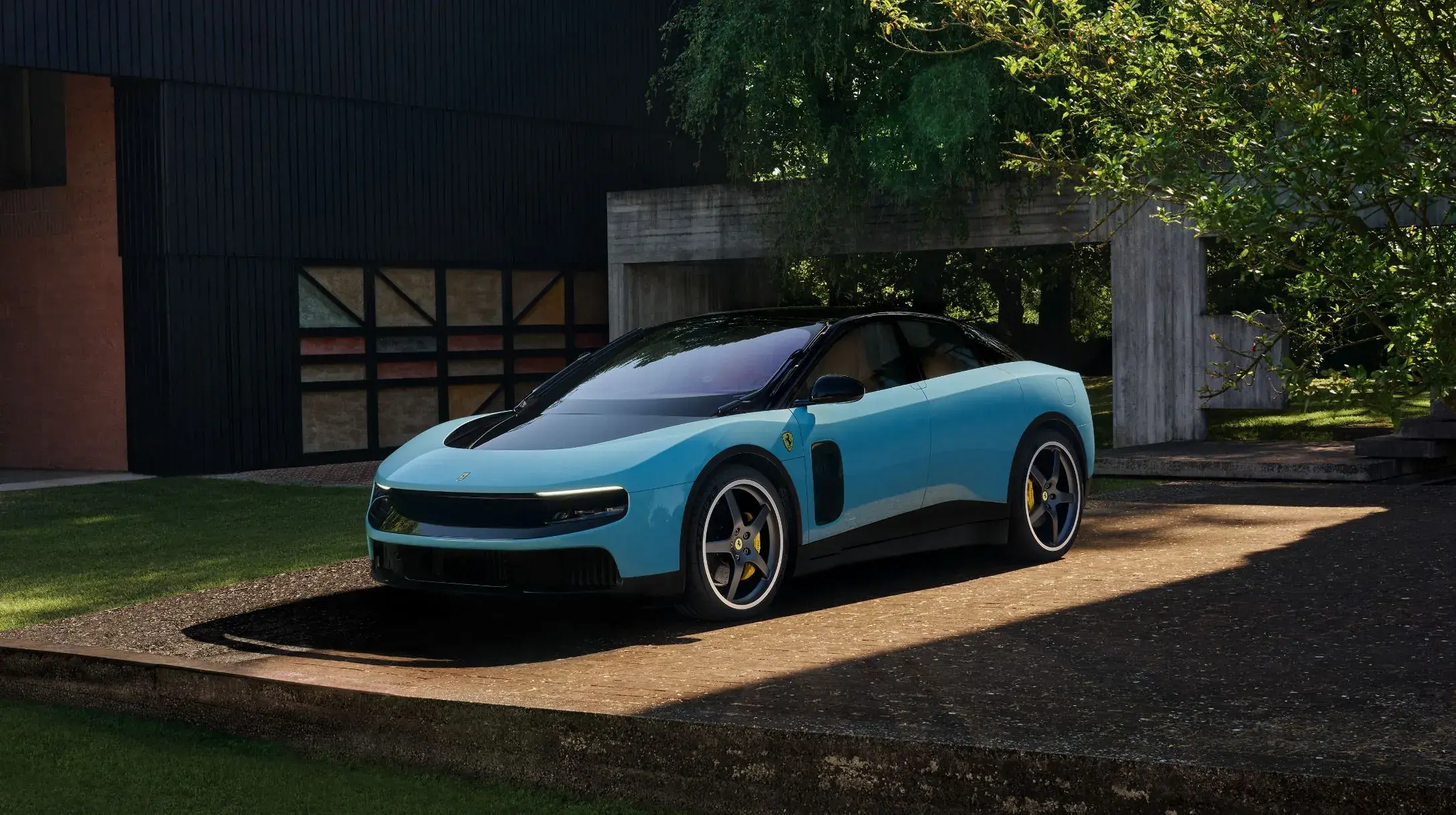
Online, the reaction was brutal. People compared it to a vacuum cleaner, an Apple Magic Mouse, and, perhaps most painfully, a Nissan Leaf. For a company built on desire, exclusivity, and visual drama, that kind of comparison cuts deep.
But the strange thing about the Luce is that it is not a simple failure. The more you look past the memes, the more complicated it becomes. This might be one of Ferrari’s most awkward exterior designs, but it may also have one of the most thoughtful interiors Ferrari has ever built.

The Ferrari Fantasy Fell Apart
Ferrari has always sold more than horsepower. It sells status, danger, beauty, and mythology. The brand’s best cars look fast even when standing still. They feel like objects from another world — dramatic, impractical, and slightly ridiculous in the best possible way.
The Luce does not communicate that same fantasy.
Its design is smooth, soft, and strangely anonymous. Instead of looking like the next evolution of Ferrari, it feels like a luxury tech object that accidentally received a Ferrari badge. That may have been intentional, especially given the involvement of Jony Ive and Marc Newson’s design firm LoveFrom, but it also explains why the car has been so polarizing.
This is not the kind of Ferrari people expected. It is cleaner, calmer, and more futuristic — but also less emotional from the outside.
A $640,000 Design Problem
The backlash becomes easier to understand when you look at the price. The Luce reportedly costs more than $640,000, placing it far beyond the reach of almost everyone. That is normal for Ferrari. What is not normal is the feeling that the car’s design does not visually justify that price.
Ferrari buyers are not just paying for speed. They are paying to be seen in something that looks impossible, rare, and unmistakable. The Luce may be rare, and it may be fast, but it does not immediately announce itself as a Ferrari in the way the brand’s greatest cars do.
That is why the internet response has been so harsh. A car that costs more than most people earn in many years cannot afford to look ordinary.
In a time where wealth inequality and corporate excess are already under heavy criticism, the Luce landed in the worst possible way: incredibly expensive, visually restrained, and easy to mock.
The Exterior Is the Weakest Part
The Luce’s shape exists because of the usual EV problem: range. Electric cars need to move through air efficiently, which often pushes designers toward smooth, rounded, low-drag bodies. That creates a direct conflict with Ferrari’s identity, which is usually sharp, dramatic, aggressive, and emotional.
The Luce tries to solve that problem with active aero, massive wheels, a smooth canopy, and a huge front air channel that guides air over the car for stability. Its headlights sit beneath a dark front panel, while active vents open and close depending on whether the car needs cooling or less drag.
There are clever ideas everywhere. But clever does not always mean beautiful.
The face of the car is the biggest issue. It does not have the instant identity people expect from Ferrari. The rear is better, with circular taillights, a Ferrari badge, and more familiar Maranello DNA. But from the front and side, the Luce still feels more like a futuristic luxury crossover than an emotional Italian performance car.


The Specs Are Not the Issue
Technically, the Luce is still a serious Ferrari. It is a quad-motor, fully electric machine with a battery larger than 120kWh and more than 300 miles of range. It has all-wheel drive, active suspension, torque vectoring, and enough power to make this family-sized five-seater track-capable.
In range mode, the Luce focuses on efficiency and limits power. In tour mode, it gives more everyday performance. In performance mode, it unlocks the full experience, with around 725kW of output and a 0–60 mph launch in about 2.5 seconds.
On paper, there is nothing weak about it.
But Ferrari’s problem has never been whether it can build a fast electric car. Of course it can. The real challenge was whether it could build an electric car that still made people feel something.
That is where the exterior struggles.
The Interior Might Be the Real Ferrari Here
The most surprising part of the Luce is that the interior seems far more successful than the exterior.
Inside, Ferrari appears to have taken the EV transition seriously instead of simply filling the cabin with giant screens. The Luce uses metal, leather, glass, and physical controls in a way that feels deliberate. The steering wheel has proper clicky controls for drive modes and traction settings. The center console uses tactile switches. Even the air vents physically rotate open and closed.
That matters.
Modern EVs often bury everything inside software menus. The Luce seems to understand that a Ferrari still needs to feel mechanical, even when the drivetrain is electric. The startup sequence is also theatrical in a new way: instead of pressing a button and hearing an engine roar, the driver places the key into a magnetic slot and pushes it in to wake the car through its displays.
It is not the old Ferrari drama, but it is at least trying to create a new ritual.
A Ferrari With a Real Back Seat
The Luce is also not a traditional two-seat supercar. It is a five-seater with three seats in the back, rear-hinged doors, and far more usable passenger space than anyone expects from a Ferrari.
That alone makes it unusual. Ferrari has already pushed into four-door territory with the Purosangue, but the Luce goes even further by using EV packaging to create a genuinely practical cabin. With no giant engine pushing the driver backward, the seating position can move forward, leaving more room for passengers.
This makes the Luce feel closer to a futuristic electric grand tourer than a classic supercar. That is part of the identity crisis, but it is also part of the car’s ambition.
It is not trying to be an electric 488 or a silent SF90. It is trying to be a new type of Ferrari entirely.
The Jony Ive Effect
The involvement of Jony Ive and Marc Newson makes the Luce even more interesting. Their design language is associated with minimalism, smooth surfaces, and elegant consumer technology. That approach worked brilliantly for products like the iPhone, where simplicity became a form of luxury.
But Ferrari is not Apple.
A Ferrari is not supposed to disappear into clean design. It is supposed to shout. It is supposed to look alive. It is supposed to feel slightly irrational.
That is why the Luce feels so conflicted. The interior benefits from that minimalist, tactile, product-design thinking. The physical switches, clever displays, satisfying materials, and clean control layout all seem to work. But the exterior suffers from the same restraint. It feels too smooth, too clean, and too anonymous for a brand built on drama.
The Luce may prove that Jony Ive’s design philosophy works beautifully inside a Ferrari — but not necessarily on the outside of one.


Ferrari’s Most Important Mistake
The biggest mistake Ferrari made was not building an EV. That was inevitable.
The mistake was building an EV that looks like it is trying too hard not to be a Ferrari.
The Luce should have been the car that convinced skeptics electric performance could still be emotional. Instead, it gave them an easy target. Rather than feeling like the future of Ferrari, it feels like Ferrari outsourcing part of its soul to the language of modern tech design.
That may be harsh, but the reaction shows how deeply people care about what Ferrari represents.
Final Thoughts
The Ferrari Luce is not a failure because it is electric. It is controversial because its exterior misunderstands the visual fantasy of Ferrari.
The numbers are impressive. The engineering is serious. The interior appears genuinely thoughtful. The physical controls, five-seat layout, active aero, quad-motor performance, and detailed cabin design all suggest Ferrari did not phone this in.
But none of that fully solves the central issue: people looked at Ferrari’s first EV and did not immediately want it.
For a normal car company, that might be survivable.
For Ferrari, desire is everything.
The Luce may eventually be remembered as a bold first step into a new era. It may even drive brilliantly. But right now, it looks like something more awkward: the moment Ferrari proved that even the most powerful brand in the world can still design a car the internet refuses to love.