Obsession: Maybe the 1st Movie to make $100M+ with a budget under $1M
A small, nasty horror film about a desperate wish gone wrong, Obsession turns romantic longing into something much darker. It’s a sharp reminder that love without choice is not love at all — it’s possession.
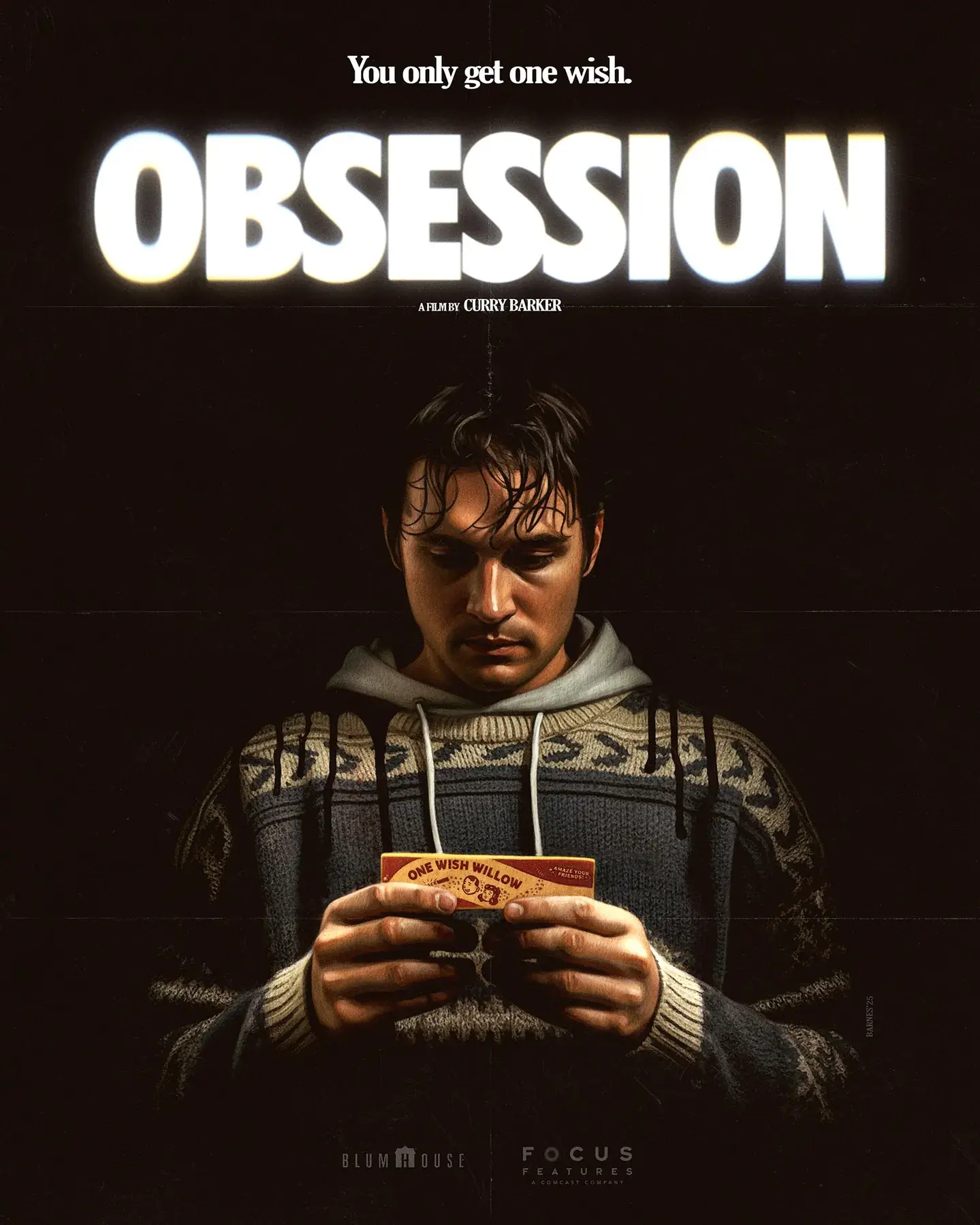
Sometimes horror does not need a huge budget, a giant mythology, or endless franchise connections to work. Sometimes all it needs is one simple idea pushed to its most uncomfortable conclusion. Obsession, written, directed, and edited by Curry Barker, is exactly that kind of film: small in scale, sharp in execution, and much more interesting than its familiar premise first suggests.
Made for under $1 million, Obsession has already become one of the year’s most surprising horror success stories. As of May 21, it had earned $44.1 million worldwide and was tracking toward a possible $100 million-plus box-office run. Focus Features acquired the film out of TIFF for around $14 to $15 million, reportedly the highest price ever paid for a genre film at the festival, and the movie currently holds a 95% score from both critics and audiences on Rotten Tomatoes. Even its origin story is oddly perfect: Barker was inspired to write the film after watching a Simpsons episode involving a monkey’s paw.

At its core, Obsession is a modern version of the old “be careful what you wish for” story. Bear, played by Michael Johnston, is an awkward young man working at a music store. He is hopelessly in love with his friend and co-worker Nikki, played by Inde Navarrette, but he cannot bring himself to tell her how he feels. When he learns that Nikki may be leaving to pursue her career, desperation takes over. He buys a strange novelty object called the One Wish Willow, which claims to grant one wish, and asks for Nikki to love him more than anyone else in the world.
It sounds romantic for about five seconds. Then it becomes horrifying.
Almost immediately, Nikki’s affection becomes intense, unstable, and unnatural. She does not simply love Bear. She clings to him, panics without him, becomes violently jealous, and slowly turns into someone who is no longer fully in control of herself. What begins as a fantasy for Bear becomes a nightmare for both of them. The wish does not create love. It creates possession.
That is where Obsession becomes more interesting than a standard cursed-object horror movie. The film does not treat Nikki as a simple villain. She is frightening, yes, but she is also a victim. Her behavior is dangerous, but it was forced onto her by Bear’s selfish desire. The movie flips the jealous-girlfriend trope by making us question who the real monster is. Nikki commits the violence, but Bear is the one who removed her free will.
This gives the film a surprisingly strong emotional core. Bear is not evil in the obvious horror-movie sense. He is lonely, insecure, and scared of rejection. But the film understands that insecurity can still become cruelty. He wants the reward of love without the risk of honesty. Instead of telling Nikki how he feels and accepting whatever answer she gives, he tries to cheat his way into intimacy. That is the true horror of Obsession: not that the wish goes wrong, but that the wish was morally wrong from the start.

The performances carry a lot of that tension. Michael Johnston makes Bear feel believable as a man who is pathetic, sympathetic, and deeply frustrating all at once. Inde Navarrette is the standout, giving Nikki the right mix of affection, terror, instability, and buried sadness. Even when Nikki becomes dangerous, the audience can still sense the real person trapped underneath the curse. That makes the horror feel more tragic than gimmicky.
The film also deserves credit for how efficiently it moves. Many horror movies waste their second act on slow investigations, obvious clues, and characters discovering things the audience already figured out. Obsession avoids that. When Bear needs answers, he gets them in a strangely funny, direct way: by calling what is basically a customer-service line for the cursed object. It is a clever choice because it keeps the story moving and adds a strange bit of comedy without breaking the horror.
Visually and structurally, Obsession does a lot with very little. It is not trying to reinvent horror, but it gives an old idea a fresh coat of paint. The supernatural elements are simple, the world is self-contained, and the tension comes more from character choices than from lore. There are disturbing moments, some sharp bursts of gore, and enough dark humor to keep the film from becoming too heavy.

What makes Obsession work is not the originality of the cursed-wish concept. It is what the film does with it. It turns a familiar morality tale into a story about modern relationships, entitlement, fantasy, and control. It asks whether loving someone means anything if that love has been forced. It also shows how easily romantic longing can become something ugly when it is mixed with fear and selfishness.
By the end, Obsession feels like a neat, nasty little horror movie with more on its mind than expected. It is funny, disturbing, well-acted, and surprisingly thoughtful. It does not waste time, does not over-explain itself, and does not insult the audience’s intelligence.
In a genre full of loud monsters and massive franchises, Obsession stands out because its horror is painfully human. It is not just about a cursed object. It is about a man who wants to be loved so badly that he forgets the other person has to choose it freely. And that is what makes the film linger after it ends.
Verdict
Scores by site
| Source | Score |
|---|---|
| Rotten Tomatoes | 9.6 / 10 |
| Imdb | 8.2 / 10 |
| Average | 8.9 / 10 |
In a genre full of loud monsters and massive franchises, Obsession stands out because its horror is painfully human. It is not just about a cursed object. It is about a man who wants to be loved so badly that he forgets the other person has to choose it freely. And that is what makes the film linger after it ends.