007 First Light Review: James Bond Finally Gets the Game He Deserves
After nearly three decades since GoldenEye set the gold standard, IO Interactive's 007 First Light has emerged as the best Bond game in 30 years, earning an 88 on Metacritic and delivering the charismatic, witty spy adventure fans have been waiting almost 30 years for.
Being a James Bond fan has been a strange experience in recent years.
After the long, moody Daniel Craig era came to an end, the film franchise seemed to stall. The big-screen future of Bond has been stuck in uncertainty, with no clear answer on who the next James Bond will be, what direction the series should take, or how Amazon plans to handle one of cinema’s most iconic characters.
But if the movie side has felt uncertain, the gaming side has been even worse.
For a character built around style, danger, seduction, exotic locations, gadgets, stealth, and violence, James Bond should have been perfect for video games. Yet developers have rarely figured out how to make him work. Yes, GoldenEye 007 remains legendary, but most Bond games either turned him into a generic first-person shooter or failed to capture the sophistication and romantic danger of the films.
There has not even been a major new Bond game in more than a decade.

That is why 007 First Light feels so important. It is not just another licensed game. It is Bond’s proper return to gaming.
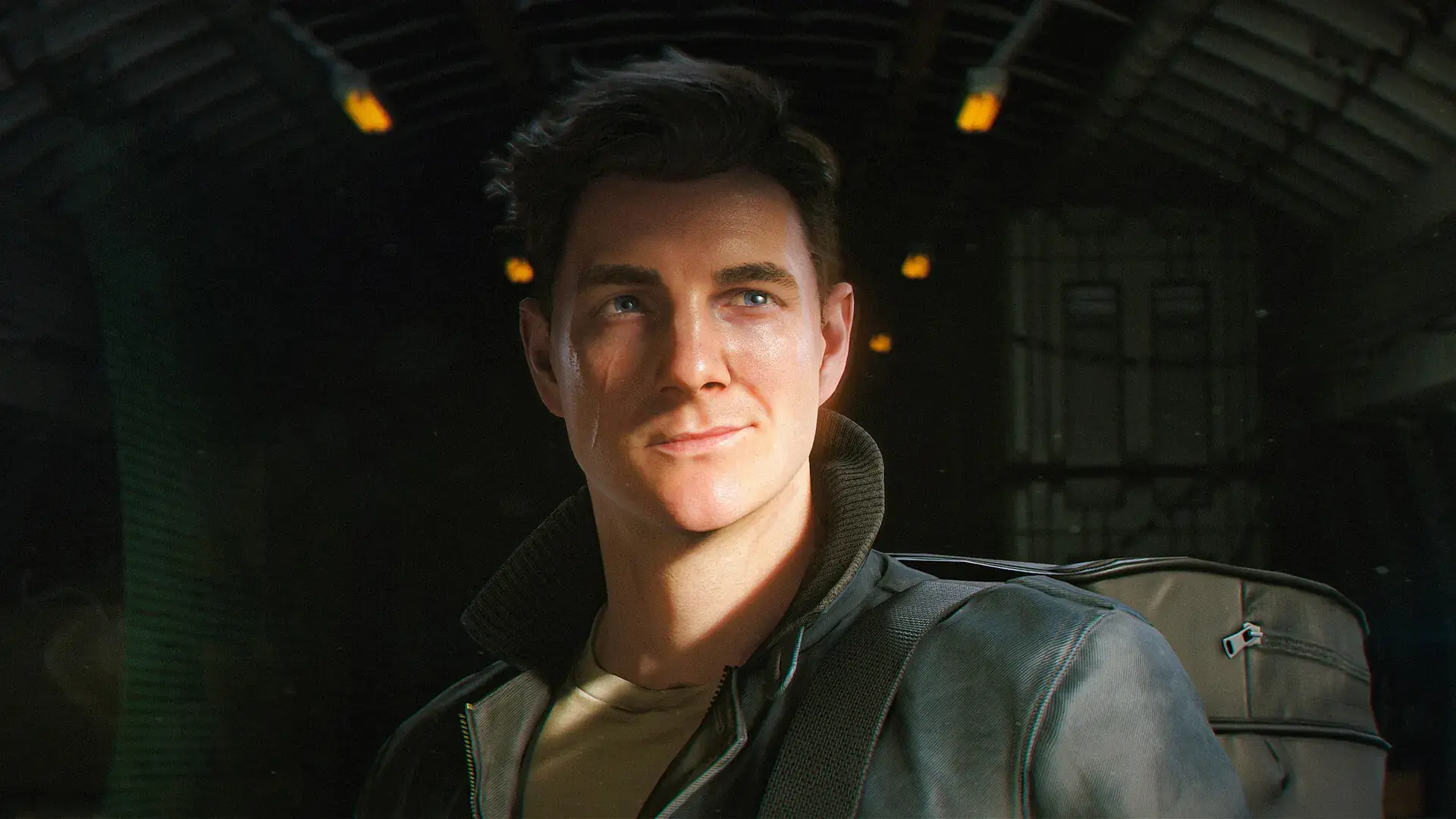
IO Interactive’s new Bond title tells an original origin story inspired by Ian Fleming’s novels, following a 26-year-old James Bond before he earns his 00 status. Played by Patrick Gibson, this younger Bond is not yet the polished legend. He is reckless, witty, charming, impulsive, and surprisingly compassionate. He still has the confidence and danger expected from the character, but the game smartly lets us see him before the myth fully forms.
The story begins in Iceland, where Bond is serving as a Royal Navy crewman investigating missing scientists. When his squad is ambushed and he becomes the sole survivor, Bond’s refusal to abandon others catches the attention of MI6. From there, he is recruited into the revived “00” program under the guidance of John Greenway, played by Lennie James.
Greenway becomes one of the game’s strongest additions. His dry, irritable mentorship gives Bond someone to push against, and their relationship brings personality to a story that could have easily become another generic spy thriller.
The game also introduces modern versions of M, Moneypenny, and Q, while Lenny Kravitz appears as the main antagonist, a casting choice that has already divided some players.
The plot deals with double agents, artificial intelligence threats, and corporate dominance. Those themes will feel familiar to fans of the Daniel Craig era, especially Skyfall, Spectre, and No Time to Die, but First Light uses them to build its own independent continuity instead of simply copying the films.


A More Book-Accurate Bond
One of the most interesting things about 007 First Light is how much it seems to care about Bond’s literary roots.
The game references the death of Bond’s parents, something the movies have only touched on lightly. It also gives Bond back his facial scar, a defining detail from Ian Fleming’s novels that the films mostly ignored.
These choices matter because they suggest IO Interactive is not just building a Bond game from movie clichés. It is trying to understand the character from the source material: a dangerous, self-confident, hard-drinking spy with expensive taste, sharp instincts, and a willingness to get the job done his way.
That balance is important. A modern Bond game has to update the world around him, but it should not sand down the character until he becomes unrecognizable. Bond is not meant to be a generic action hero in a tuxedo. He is charm under pressure, arrogance under control, and violence hidden beneath good tailoring.
First Light understands that better than most Bond games ever have.

Hitman Meets Uncharted
The smartest decision IO Interactive made was not turning Bond into a standard shooter. Instead, 007 First Light blends the studio’s Hitman DNA with cinematic action closer to Uncharted, with flashes of slick modern stealth similar to Splinter Cell: Conviction.
That combination makes immediate sense. If any modern studio understands stealth, infiltration, disguises, gadgets, social manipulation, and explosive improvisation, it is IO Interactive.
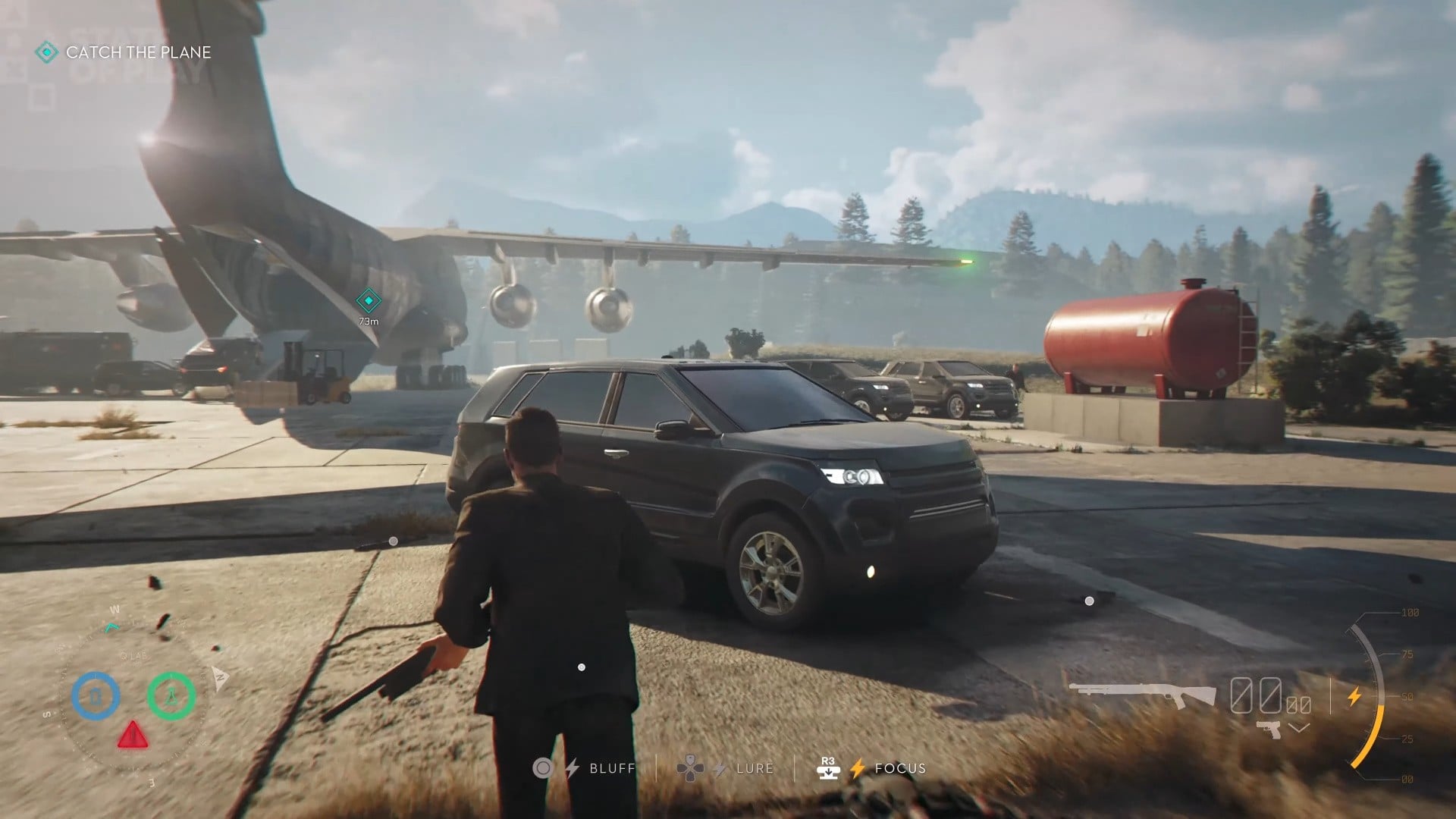
The game’s structure is mostly linear, but many missions open with Bond entering a public space, walking around freely, talking to people, reading the room, and figuring out how to get into restricted areas. Sometimes that means stealing an invite. Sometimes it means impersonating someone. Sometimes it means hacking a laptop, distracting a guard, or using the environment to create a small disaster.
This is where the Hitman roots show. It is not as deep or endlessly flexible as Hitman, but it has enough options to make Bond feel clever. It is “Hitman light,” but in a way that suits a faster, more cinematic spy adventure.
The bluff system is one of the game’s best ideas. If certain enemies spot you, Bond can sometimes talk his way out of trouble using a resource and a well-timed lie. It turns being discovered into a moment of character instead of an instant failure state.
The gadgets also add a playful spy-movie energy. You can hack cameras, burst pipes, trigger distractions, blind enemies, or use a laser watch in the middle of chaos. It is ridiculous in the right way, and that is exactly what a Bond game needs.

Combat That Feels Improvised
When stealth breaks down, 007 First Light becomes a fast, messy, improvisational action game.
Hand-to-hand combat is simple, but punchy. Bond can dodge, parry, grab enemies, throw them into walls, shove them over crates, slam them into server racks, or send them flying off ledges. The melee system is not especially complex on its own, but it works because the environment is always part of the fight.
Gunplay is also built around movement and improvisation. Ammo is limited, so you are constantly switching weapons, stealing guns, using whatever is nearby, and making quick decisions. You might blind a group with a smoke gadget, take two enemies down with your fists, shoot an explosive barrel in slow motion, grab a dropped weapon, disarm another guard, then throw a brick at someone before tossing them over a railing.
That is where the game feels best. It does not always look perfectly smooth, but it feels good to play because Bond is always reacting. You are not just shooting waves of enemies. You are using gadgets, fists, guns, furniture, pipes, explosives, and whatever else the level gives you.
On higher difficulty, this becomes even more satisfying because you are forced to use everything. You cannot simply rely on shooting your way out. You have to play like Bond: fast, stylish, and slightly reckless.
Not every weapon feels great, though. Snipers, in particular, seem underwhelming. But the combat loop works because the fun is not in one system alone. It is in the combination of all of them.
A Stronger Story Than Expected
The biggest surprise is the writing.
Critics have repeatedly called this IO Interactive’s best-written game by a wide margin, and it is easy to see why. The dialogue has more texture, the character relationships feel sharper, and Bond’s journey from reckless recruit to emerging 00 agent gives the campaign a real sense of progression.
Patrick Gibson’s Bond is one of the game’s biggest wins. Choosing a new Bond is never easy, but he works here. He is smart, cunning, mischievous, flirtatious, and cocky without becoming annoying. His quips feel closer to classic Bond than modern Marvel-style sarcasm, and the game lets him enjoy being Bond in a way the recent films often avoided.
The supporting cast is more mixed. Some characters do not get enough screen time, while others feel like fresh spins on familiar figures. Q is given a cooler modern edge, while M may be more divisive. Greenway, however, is the standout. Lennie James gives him enough irritation, authority, and dry humor to make him feel like a real mentor rather than a plot device.
The fan service is also handled well. It is not just empty nostalgia bait. Walking around Q Branch, inspecting weird prototypes, hearing familiar musical motifs, and catching hidden references gives the game a strong Bond identity without turning it into a checklist.
That is why the eventual “Bond, James Bond” moment works. It is not just fan service. The game spends enough time building the character that the line has weight.
Visuals, Music, and Atmosphere
Visually, 007 First Light can be impressive.
IO Interactive already proved with the modern Hitman trilogy that it knows how to build large, beautiful, crowded environments, and that skill carries over here. The game has exotic locations, dense public spaces, cinematic lighting, destructive environments, explosions, and plenty of visual detail.
The environments do not feel like empty decoration either. They are part of the gameplay. Objects break, enemies react, spaces change during fights, and Bond constantly interacts with the world around him.
The music is another major strength. The score moves between ambient spy atmosphere, big orchestral action, and classic Bond-style motifs without feeling forced. Even the title sequence song reportedly grows on you with time, helping the game feel like a proper Bond production rather than just an action game with a license attached.
The overall soundscape is one of the reasons the game works as well as it does. The enemy reactions, the gadgets, the explosions, the music, and the dialogue all combine to make the world feel energetic and cinematic.

Not Perfect, But Close
For all its strengths, 007 First Light is not flawless.
Performance is the biggest concern. Critics and players have reported console issues, especially framerate drops on PS5 Pro, while PC players have raised concerns about optimization. Some visual details also seem inconsistent, with certain areas looking impressive while others feel closer to late PS4-era presentation.
The game also has one or two pacing problems. Most locations are exciting, but at least one section reportedly feels padded out to extend the runtime. It is not enough to ruin the campaign, but when the rest of the game moves with such confidence, the weaker areas stand out.
The boss battles are another weak point. They apparently start strong, but the final boss does not quite land. That is a shame because the ending itself seems to work, but the actual encounter does not match the strength of the story around it.
The driving sequences are also disappointing. There are a few fun vehicle moments, especially with more destructive sequences involving trucks and larger set pieces, but the dream of tearing through a level in an Aston Martin does not hit as hard as it should. For a Bond game, that is one area a sequel absolutely needs to improve.
There is also a lot of obvious yellow paint and modern action-game signposting, which some players may find distracting. And while the game has flexibility, it is still much less replayable than Hitman: World of Assassination.
Still, these issues do not stop 007 First Light from feeling like a major win.
Campaign Length and Replay Value
The campaign reportedly takes around 15 and a half hours if played aggressively, which is longer than some may expect from a cinematic Bond game. For the most part, that runtime seems justified, with only one section feeling noticeably padded.
Replay value is not on the same level as Hitman, but First Light does offer more than just the main campaign. The separate Tax Sim mode gives players combat and stealth challenge scenarios with modifiers, scores, ranks, unlocks, new weapons, gadget upgrades, outfits, and a Q Lab-style hub area.
That mode is a smart addition because the combat flow is one of the game’s most replayable elements. If IO Interactive supports it over time, even at a smaller scale than Hitman, Tax Sim could become a strong long-term mode. The game already teases future driving challenges, which could help address one of the campaign’s weaker areas.
Platforms, Editions, and Technical Details
007 First Light launched on May 27, 2026, with Deluxe Edition early access beginning May 26. It is available on PS5, Xbox Series X/S, and PC through Steam and Epic Games Store. A Switch 2 version is planned for Summer 2026, but there is no PS4 or Xbox One release.
The standard edition is priced at $69.99 / £59.99, while the Deluxe Edition costs $89.99 and includes bonus outfits, weapon skins, the soundtrack, and 24-hour early access. A Legacy Collector’s Edition is also available for $299.99, featuring a Golden Gun replica, steelbook, and physical art.
The game runs on IO Interactive’s evolved Glacier Engine, with a 60fps target, enhanced lighting, real-time shadows, path tracing, improved animation, and a new “Smolder System” for smoke, fire, and particle effects. On PC, it supports DLSS 4 with Multi Frame Generation through NVIDIA collaboration.
Storage requirements are around 80 GB on PC and 55 GB on Xbox.

Verdict
Scores by site
| Source | Score |
|---|---|
| OpenCritic | 8.8 / 10 |
| Metacritic | 8.8 / 10 |
| IGN | 9.0 / 10 |
| Steam | 9.0 / 10 |
| Average | 8.9 / 10 |
007 First Light succeeds because it understands that James Bond is not just a man with a gun. He is charm under pressure. He is wit in a death trap. He is intelligence wrapped in arrogance, style, and danger.
After years of uncertainty around Bond’s future in film and more than a decade without a major game, IO Interactive has delivered something that finally feels worthy of the name. The game respects the source material, modernizes the formula where it needs to, and gives players the fantasy Bond games have struggled to deliver for decades.
It is not as endlessly replayable as Hitman, the driving needs work, and the boss battles could have been stronger. But the blend of stealth, action, gadgets, cinematic spectacle, sharp writing, and improvisational combat makes this the most convincing Bond game since GoldenEye.
For Bond fans, this is an easy recommendation. For fans of big AAA action-adventure games, it is still worth paying attention to.
It may not reinvent the spy genre, but it gives James Bond the modern game he always deserved.
The spy is back, and while nobody seems to know what is happening with the next movie, at least gaming finally gave Bond his moment.